Join our Ocean Health Checks

MARINElife protects key marine species by gathering and distributing relevant, robust and up-to-date information to those working for the sustainable future of our oceans.

Support our work

Science for our seas

Image 1 Image 2 Image 4 Image 5

Recording species and sightings

MARINElife’s experienced volunteers carry out scientifically robust surveys of dolphins, whales and seabirds on a variety of vessels at sea in UK and bordering waters.

The work is done in partnership with a wide range of sponsoring bodies from ecotourism through to research institutes and shipping companies.

Take a look at our findings from angling boats through to large commercial ferries, monitoring the creatures of the seas.

View all reports

Help us thrive

From one-off gifts to regular support, your fundraising and donations keep us afloat. Our vital work wouldn’t be possible without your help.

Support us today

Want to identify marine wildlife?

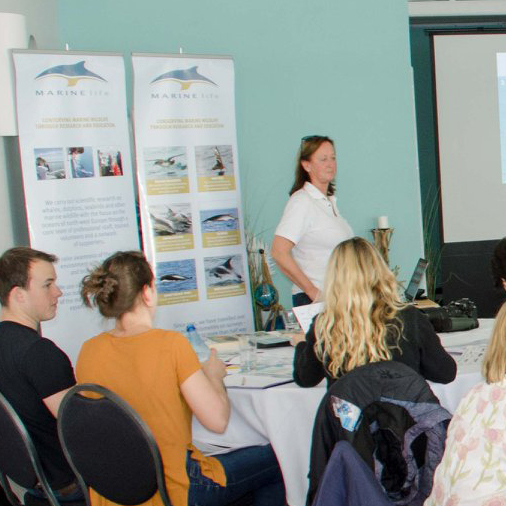
Become a Citizen Scientist for marine conservation, or a MARINElife volunteer ship-based surveyor to identify marine wildlife seen from shore and sea.
View training courses

Shop

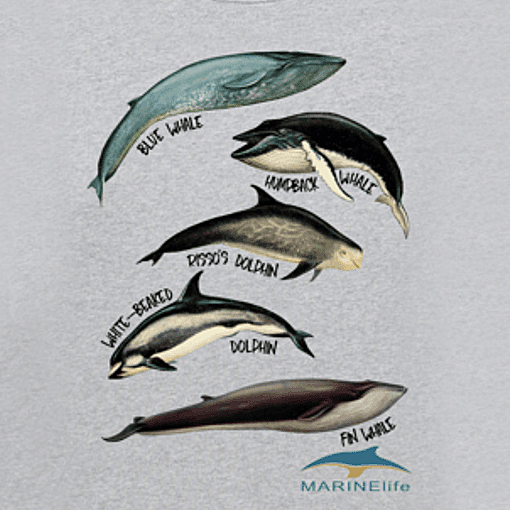
Support MARINElife while you shop! Look great in our custom clothing, or buy gifts for friends. The funds we receive help us continue our conservation work.
Shop now

The morning was bright and sunny as I drove into Dover and met up with Holly, my fellow surveyor. We collected our port passes and made our way to the DFDS check-in and then on to the ferry.

Once aboard the Cote des Flandres, we reported to the information desk and were taken up to the bridge, where the captain and crew made us welcome as we settled down out of the way while the vessel was unmoored and made its way out of the harbour.

Our survey then began, quietly at first, with low numbers of Gannet and Great Black-backed Gull. Four corvids were also spotted soon after departure, heading for Dover. It was tempting to wish they were Chough, a rare species which is currently becoming established on the Dover cliffs, but the birds were too far away to allow identification.

4th year Gannet (Library photo: Peter Howlett)

Among the early Gannet were third-, fourth- and fifth-year immature birds, as well as adults in breeding plumage.

Around mid-Channel, we spotted our first terns of the survey, including a Sandwich Tern, and our first Kittiwake, which were then sighted frequently for the remainder of the outward voyage.

As we neared Calais, a small flock of Common Scoter flew past the ship in the swift, direct manner characteristic of these dark sea ducks. Two Shag were then observed on the water as we headed into the harbour.

Once unloaded and re-loaded, the Cote des Flandres set sail once more, manoeuvring out of the harbour and back into the English Channel for the return crossing and the second leg of our survey.

On the way back to Dover, Gannet and Kittiwake were again the most numerous species, and both were recorded in higher numbers. Small numbers of auk, including Guillemot, were sighted in flight and on the water.

Harbour Porpoise (Library photo: Peter Howlett)

With the sea state increasing as we crossed the Strait, the likelihood of spotting cetaceans appeared to be diminishing. Then a dark shape was glimpsed among the waves ahead of the vessel, followed by the sight of two Harbour Porpoise surfacing and disappearing several times as they crossed our bow.

Closing in on Dover, we added Common Tern and a diver to our bird list before concluding the survey as we entered the harbour.

Our thanks to DFDS, Captain Blanquart, his officers and crew for their warm welcome and for facilitating our survey.

Pat Hatch and Holly Kembrey, Research Surveyors for MARINElife (Registered Charity No. 1110884; Registered Company No. 5057367)

Weather

Outbound – Moderate visibility, overcast, wind ENE force 5-6

Return – Moderate visibility, clear sky, wind NNE force 5-6